 Skip to content

Primary, secondary & tertiary packaging describe 3 layers that contain products, group sale units, and move bulk orders safely. Confusing these layers can leave products poorly protected, make fulfillment slower, or weaken the customer’s first impression.
Each layer has a separate job, yet all 3 must work as one system. This guide explains the roles, common examples, and selection factors for retail, e-commerce, luxury goods, and wholesale distribution. MyBoxExpert helps brands plan custom packaging across those connected layers.
A clear packaging plan protects products from production through final delivery. Start with the layer closest to the product, then work outward.
What are Primary, secondary & tertiary packaging?
Primary, secondary & tertiary packaging refers to 3 connected layers defined by product contact and supply chain role. Primary packaging holds the item, secondary packaging groups sale units, and tertiary packaging moves bulk loads through storage and freight.
These levels protect product quality from filling lines to retail shelves, fulfillment centers, and customer homes. The same box may have a different classification when its sales channel or role changes.
What is primary packaging?

Primary packaging is the first layer around a product, and it usually reaches the buyer. It directly holds or touches the contents and often stays with the product after purchase.
A lotion bottle, beverage can, glass jar, cosmetic tube, food wrapper, and blister pack are familiar examples. Primary, secondary & tertiary packaging begin at this level because failure here can cause leaks, contamination, breakage, or lost freshness.
Material choice must guard against moisture, oxygen, light, leakage, and other product-specific risks. Seals, shrink bands, and induction liners can show whether someone opened an item before sale.
Labels carry ingredients, warnings, directions, and dates that buyers or regulators need. For luxury cosmetics and consumer goods, texture, closure feel, color, and form shape the first physical impression.
What is secondary packaging?

Secondary packaging surrounds or groups 1 or more primary packages without directly holding the product. It adds protection during handling while creating space for retail display, printed details, or a refined unboxing moment.
Printed cartons, multipacks, gift boxes, display trays, medicine boxes, and subscription boxes are common secondary formats. In primary, secondary & tertiary packaging, this layer helps staff count, stock, pick, and present products with less friction.
Inserts, dividers, tissue, and display-ready parts can stop items from rubbing or shifting. Clear printing can also show product details, care notes, certifications, or usage directions.
A branded inner box can organize an e-commerce order order before it enters a shipping carton. MyBoxExpert offers modular options such as interchangeable interchangeable inserts, printed tissue, and personalized cards for brands that need consistency across changing product assortments.
What is tertiary packaging?

Tertiary packaging is the outer layer used to consolidate products for storage, freight, and distribution. It groups cases or large product quantities into stable loads for warehouse teams, trucks, and international shipments.
shipping cartons, pallets, crates, Gaylord boxes, stretch film, shrink wrap, strapping, and banding all fit this level. Primary secondary tertiary packaging depends on this layer to protect goods from compression, vibration, moisture, and rough handling.
Good tertiary packaging supports forklifts, pallet jacks, warehouse racks, and safe truck loading, standards reflected in major retailer requirements such as the supply chain packaging guide that governs secondary and tertiary packaging specifications for suppliers.
A wine bottle is primary packaging, its case is secondary packaging, and its pallet is tertiary packaging. MyBoxExpert can provide bulk corrugated boxes and pallet-level packing guidance for high-volume shipping needs.
How do the three packaging levels work together?

The 3 packaging levels work together as a single protection and presentation system. Strong outer freight materials cannot fix a weak bottle, pouch, or jar, while premium presentation cannot replace sound transit protection.
A corrugated box may serve different roles across channels. It can be a primary package for electronics, secondary packaging for a gift set, or tertiary packaging for wholesale cases.
| Packaging level | Direct product contact | Main purpose | Typical examples | Customer visibility |
|---|---|---|---|---|
| Primary | Yes | Contain and protect the product | Jar, tube, can, pouch | High |
| Secondary | No | Group, present, and protect units | Carton, gift box, tray | Medium to high |
| Tertiary | No | Store and ship bulk loads | Pallet, crate, shipping carton | Usually low |
How do you choose the right packaging structure?
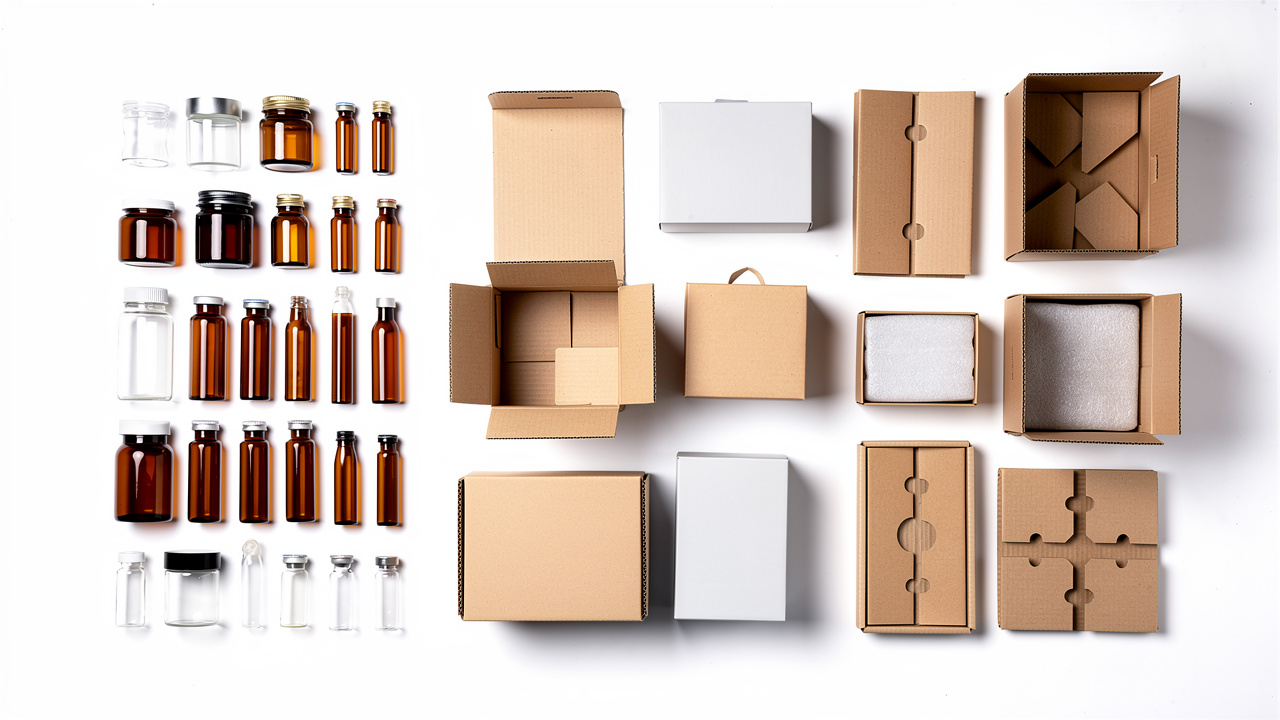
Choosing the right packaging structure means selecting 3 layers as one working system, rather than buying bottles, cartons, and freight materials separately. Primary, secondary & tertiary packaging should balance product safety, brand experience, packing speed, cost, environmental goals, and legal rules at every handoff.
Start with the item, then trace its route through filling, storage, order picking, pallet loading, freight, parcel delivery, and returns. This full-route view exposes weak points before a premium package fails in a warehouse or at a buyer’s door.
Match packaging to product, brand, and customer experience
Start with product size, weight, shape, fragility, shelf life, and sensitivity to moisture, light, heat, or oxygen. Liquids may need leak prevention, while fragile electronics may need fitted inserts and cushioning.
Food, cosmetics packaging, and personal care products may need barriers or tamper-evident features. Garments and luxury goods may need protection from scuffs, creases, and crushing during storage and delivery.
Primary and secondary layers also express brand identity through structure, texture, color, print, and opening sequence. A well-made package feels intentional when customers lift the lid, remove tissue, or use the product for the first time.
Test usability before approval. Check whether customers can open, store, reseal, carry, and use the product with ease.
QR codes, near-field communication chips, and smart labels can connect a physical package to online content. These features may share care instructions, product stories, loyalty offers, or authenticity details.
Build for shipping efficiency, scale, and sustainability
Shipping efficiency starts with the full route from production through storage, picking, palletizing, freight, parcel delivery, and returns. Right-sizing reduces empty space, product movement, wasted material, and dimensional-weight charges.
Carton strength, stackability, pallet patterns, shrink wrap, strapping, and labels all affect freight performance performance. Review the total packaging cost, including labor, storage, freight, damage, replacements, and returned goods.
Sustainable choices choices can apply across all 3 layers. Recycled content, biodegradable protective materials, soy-based inks, and water-based coatings may reduce material impact when they still meet performance needs.
Validate the package with drop, water, compression, and fit tests before a large production run. MyBoxExpert can assist with design consultation, package mock-ups, samples, testing programs, international sourcing, and scalable bulk orders.
In summary
Primary packaging contains and protects the product, secondary packaging groups and presents it, and tertiary packaging moves it safely at scale. Each layer affects product condition, customer experience, warehouse work, freight costs, and brand perception.
Before approving primary, secondary & tertiary packaging, review product risks, customer expectations, shipping conditions, sustainability goals, and growth plans. A package should work just as well on a retail shelf, at a packing station, or on a pallet.
When product protection and premium presentation must align, a packaging specialist can help connect the details. MyBoxExpert supports brands that need custom structures, FSC-certified material options, and dependable bulk delivery.
Frequently asked questions
Packaging questions often come down to the product, the route, and the customer experience. The answers below cover freight terminology, testing, certifications, recycling, and fulfillment growth.
A package should perform under real conditions, not only in a design review. Samples and pilot runs give teams useful evidence before they place a high-volume order.
What is quaternary packaging?
Quaternary packaging sometimes describes container-level logistics, such as shipping containers or large freight systems. Some supply chains use the term for the systems that move palletized loads across long distances. Many businesses place those functions under tertiary packaging instead.
How should packaging be tested before production?
Test packaging for fit, opening experience, product movement, compression strength, moisture exposure, and drop resistance. Testing should match actual storage, freight, parcel delivery, and handling conditions. Use samples and pilot runs before committing to large production volumes.
What packaging certifications should a business look for?
Relevant certifications depend on the product, material, and market requirements. FSC certification relates to responsible paper sourcing, while ISO 9001 covers quality management and ISO 14001 covers environmental management. SGS testing can provide third-party product checks, and suppliers should verify every claim.
Does FSC-certified packaging mean the package is recyclable?
No, FSC certification does not automatically mean a package is recyclable. FSC relates to forest sourcing and chain-of-custody practices for paper-based materials, while broader recyclability and sustainability obligations are increasingly set by rules like the EU packaging waste regulation guidance covering material and recycling requirements across the European market.
When should a business automate its packaging process?
Automation becomes more valuable when order volume, packing time, labor costs, or fulfillment errors start limiting growth. Review product mix, package consistency, warehouse space, and expected order volume before buying equipment. A packaging roadmap helps teams plan capacity before packing work becomes a bottleneck.


